verified_designs
27 TopicsSecuring Applications using mTLS Supported by F5 Distributed Cloud
Introduction Mutual Transport Layer Security (mTLS) is a process that establishes encrypted and secure TLS connection between the parties and ensures both parties use X.509 digital certificates to authenticate each other. It helps to prevent the malicious third-party attacks which will imitate the genuine applications. This authentication method helps when a server needs to ensure the authenticity and validity of either a specific user or device. As the SSL became outdated several companies like Skype, Cloudfare are now using mTLS to secure business servers. Not using TLS or other encryption tools without secure authentication leads to ‘man in the middle attacks.’ Using mTLS we can provide an identity to a server that can be cryptographically verified and makes your resources more flexible. mTLS with XFCC Header Not only supporting the mTLS process, F5 Distributed Cloud WAF is giving the feasibility to forward the Client certificate attributes (subject, issuer, root CA etc..) to origin server via x-forwarded-client-cert header which provides additional level of security when the origin server ensures to authenticate the client by receiving multiple requests from different clients. This XFCC header contains the following attributes by supporting multiple load balancer types like HTTPS with Automatic Certificate and HTTPS with Custom Certificate. Cert Chain Subject URI DNS How to Configure mTLS In this Demo we are using httpbin as an origin server which is associated through F5 XC Load Balancer. Here is the procedure to deploy the httpbin application, creating the custom certificates and step-by-step process of configuring mTLS with different LB (Load Balancer) types using F5 XC. Deploying HttpBin Application Here is the link to deploy the application using docker commands. Signing server/leaf cert with locally created Root CA Commands to generate CA Key and Cert: openssl genrsa -out root-key.pem 4096 openssl req -new -x509 -days 3650 -key root-key.pem -out root-crt.pem Commands to generate Server Certificate: openssl genrsa -out cert-key2.pem 4096 openssl req -new -sha256 -subj "/CN=test-domain1.local" -key cert-key2.pem -out cert2.csr echo "subjectAltName=DNS:test-domain1.local" >> extfile.cnf openssl x509 -req -sha256 -days 501 -in cert2.csr -CA root-crt.pem -CAkey root-key.pem -out cert2.pem -extfile extfile.cnf -CAcreateserial Note: Add the TLS Certificate to XC console, create a LB(HTTP/TCP) and attach origin pools and TLS certificates to it. In Ubuntu: Move above created CA certificate (ca-crt.pem) to /usr/local/share/ca-certificates/ca-crt.pem and modify "/etc/hosts" file by mapping the VIP(you can get this from your configured LB -> DNS info -> IP Addr) with domain, in this case the (test-domain1.local). mTLS with HTTPS Custom Certificate Log in the F5 Distributed Cloud Console and navigate to “Web APP & API Protection” module. Go to Load Balancers and Click on ‘Add HTTP Load Balancer’. Give the LB Name (test-mtls-cust-cert), Domain name (mtlscusttest.f5-hyd-demo.com), LB Type as HTTPS with Custom Certificate, Select the TLS configuration as Single Certificate and configure the certificate details. Click in ‘Add Item’ under TLS Certificates and upload the cert and key files by clicking on import from files. Click on apply and enable the mutual TLS, import the root cert info, and add the XFCC header value. Configure the origin pool by clicking on ‘Add Item’ under Origins. Select the created origin pool for httpbin. Click on ‘Apply’ and then save the LB configuration with ‘Save and Exit’. Now, we have created the Load Balancer with mTLS parameters. Let us verify the same with the origin server. mTLS with HTTPS with Automatic Certificate Log in the F5 Distributed Cloud Console and navigate to “Web APP & API Protection” module. Goto Load Balancers and Click on ‘Add HTTP Load Balancer’. Give the LB Name(mtls-auto-cert), Domain name (mtlstest.f5-hyd-demo.com), LB Type as HTTPS with Automatic Certificate, enable the mutual TLS and add the root certificate. Also, enable x-forwarded-client-cert header to add the parameters. Configure the origin pool by clicking on ‘Add Item’ under Origins. Select the created origin pool for httpbin. Click on ‘Apply’ and then save the LB configuration with ‘Save and Exit’. Now, we have created the HTTPS Auto Cert Load Balancer with mTLS parameters. Let us verify the same with the origin server. Conclusion As you can see from the demonstration, F5 Distributed Cloud WAF is providing the additional security to the origin servers by forwarding the client certificate info using mTLS XFCC header. Reference Links mTLS Insights Create root cert pair F5 Distributed Cloud WAF5.7KViews4likes1CommentMulti-port support for HTTP/TCP load balancers in F5 Distributed Cloud (XC)
Overview: In the ever-evolving landscape of the digital world driven by innovation, catering to the new requirements is vital for modern application scalability, adaptability, and longevity. Multi-port support refers to the capability of a system to handle and manage multiple application ports simultaneously. This flexibility is particularly important in scenarios where a single device needs to serve diverse services. Multi-port support is essential for various reasons, including some of the below: Parallel Processing: It allows the system to process multiple app streams concurrently, enhancing efficiency and reducing latency. Diverse Services: Different applications or services often require dedicated ports to function. Multi-port support enables a system to accommodate a variety of services simultaneously. Load Balancing: Distributing application traffic across multiple ports helps balance the load, preventing bottlenecks and optimizing resource utilization. Security: Sometimes SecOps want to have testing ports opened, which allow access to applications for testing, scanning, monitoring, and addressing potential security vulnerabilities. Flexibility: Systems with multi-port support are adaptable to modern micro-service-based architectures, supporting a diverse range of applications and services. IP limitations: Since IP’s are limited, customers don’t want to use a different IP for each user, so instead they want to reserve a single IP and want to distribute load on different ports. Note: For today’s demonstration, we have deployed multiple demo applications like JuiceShop, DVWA, NGINX, F5 Air as micro-services on multiple systems/ports to showcase the capabilities of multi-port support and their deployment steps are out of scope in this article. Let’s unravel three below real-world use cases of multi-port support and how it can be implemented in F5 Distributed Cloud (F5 XC) in easy-to-follow steps. Use case I – Multiple Ports In this use case, let’s assume the customer already has onboarded his backend application as an origin pool in XC. Next, the customer wants to access the same application using multiple ports, either for genuine access or for testing. For achieving this use case, follow below steps: Login to F5 XC console and navigate to “Distributed Apps” --> “Manage Load balancer” section For this use case, create a HTTP load balancer with your backend application, needed ports in csv format, type as HTTP, name, domain name as shown below. NOTE: Provide only unused ports or you will run into port conflict errors. Also configure DNS records as per your setup. Once load balancer is created successfully, validate your application is accessible on the configured port and LB domain name Use case II – Port Range In this scenario, customers have the requirement to access an application in a range of ports either for parallel processing or load balancing. For configuration, follow below steps: Login to F5 XC console and navigate to “Distributed Apps” section For this use case, create a HTTPS load balancer with your backend application, needed port range and domain name as shown below. NOTE: Provide only unused port range to avoid port conflict error. Validate your application is accessible on configured ports just like below Use case III – Origin Pool Dynamic port In this requirement, the backend application port should be dynamic and is dependent on the load balancer access port number. Let’s say a customer has multiple services running on multiple ports and wants users to access these services using a single TCP load balancer. To meet this solution, follow steps below: Login to F5 XC console and navigate to “Distributed Apps” section Next, move to “Origin Pool” section and onboard your basic backend application details and select the "origin server port" option as the "loadbalancer port" (as shown below). We can also configure health checks to LB ports instead of endpoints for better visibility. We are halfway there!!. Move to “TCP Load balancer” section and create a TCP load balancer with required port ranges and your application origin pool. Your configuration will look something like below Finally for the fun part: Once load balancer comes to a READY state, open a browser and make sure different services are accessible on configured domain name and ports shown below NOTE: For above solution to work, multiple services should be running on the configured ports of backend system and this port range should be unused by other services on the XC platform We have just scratched the surface of the the wide range of use cases of multi-port and there is a lot of demand in the market for many scenarios combining different functionalities of HTTP/HTTPS/TCP, single/multi services on same system or multiple backend systems and can also be routed to appropriate backends using port range filters in routes. As per customer requirements, appropriate configurations can be done on F5 XC for seamless integration and to leverage the pervasive WAAP security ecosystem. Conclusion: Winding up, this article pondered the market demand for the support of multi-port range in HTTP/TCP load balancers and then we took you on a roller coaster ride of different use cases. Finally, we also demonstrated how F5 XC can foster in shaping and optimizing your application versatile multi-port requirements. Ever wondered what is F5 XC and how it acts as a “Guardian of Applications”, check below links: F5 Distributed Cloud Services F5 Distributed Cloud WAAP2.5KViews4likes1CommentSupport of WAF Signature Staging in F5 Distributed Cloud (XC)
Introduction: Attack signatures are the rules and patterns which identifies attacks against your web application. When the Load balancer in the F5 Distributed Cloud (XC) console receives a client request, it compares the request to the attack signatures associated with your WAF policy and detects if the pattern is matched. Hence, it will trigger an "attack signature detected" violation and will either alarm or block based on the enforcement mode of your WAF policy. A generic WAF policy would include only the attack signatures needed to protect your application. If too many are included, you waste resources on keeping up with signatures that you don't need. Same way, if you don't include enough, you might let an attack compromise your application. F5 XC WAF is supporting multiple states of attack signatures like enable, disable, suppress, auto-supress and staging. This article focusses on how F5 XC WAF supports staging and detects the staged attack signatures and gives the details of attack signatures by allowing them into the application. Staging: A request that triggers a staged signature will not cause the request to be blocked, but you will see signature trigger details in the security event. When a new/updated attack signature(s) is automatically placed in staging then you won't know how that attack signature is going to affect your application until you had some time to test it first. After you test the new signature(s), then you can take them out of staging, apply respective event action to protect your application! Environment: F5 Distributed Cloud Console Security Dashboard Configuration: Here is the step-by-step process of configuring the WAF Staging Signatures and validating them with new and updated signature attacks. Login to F5 Distributed Cloud Console and navigate to “Web App & API Protection” -> App Firewall and then click on `Add App Firewall`. Name the App Firewall Policy and configure it with given values. Navigate to “Web App & API Protection” à Load Balancers à HTTP Load Balancers and click on `Add HTTP Load Balancers`. Name the Load Balancer and Configure it with given values and associate the origin pool. Origin pool ``petstore-op`` configuration. Associate the initially created APP firewall ``waf-sig-staging`` under LB WAF configuration section. ``Save and Exit`` the configuration and Verify that the Load balancer has created successfully with the name ``petstore-op``. Validation: To verify the staging attacks, you need the signature attacks listed in attack signature DB. In this demo we are using the below newly added attack signature (200104860) and updated attack signature (200103281) Id’s. Now, Let’s try to access the LB domain with the updated attack signature Id i.e 200103281 and verify that the LB dashboard has detected the staged attack signature by reflecting the details. F5 XC Dashboard Event Log: Now try to access the LB domain with new signature attack adding the cookie in the request header. F5 XC Dashboard Event Log: Now, Disable the staging in WAF policy ``waf-sig-staging``. Let’s try to access the LB domain with new signature attack. F5 XC Dashboard Event Log: Conclusion: As you see from the demo, F5 XC WAF supports staging feature which will enhance the testing scope of newly added and updated attack signature(s). Reference: F5 Distributed Cloud WAF Attack Signatures2.4KViews5likes2CommentsGet Started with WAAP Security Incidents
Introduction: F5 Distributed Cloud (F5 XC) Web Application and API Protection (WAAP) provides a rich set of security configurations to safeguard applications. Each application configuration differs, so configuring appropriate controls and security measures is needed to prevent applications from data breaches. Even though your application is currently protected, it doesn’t necessarily mean it’s steel proof for future intrusions. We should keep monitoring application event data for new types of attacks that may surface. If new exploits are found, we must accordingly update the existing configurations. Identifying the security attacks and taking a necessary action at the right moment is pivotal in protecting applications. Each minute of delay may result in severe consequences to businesses as well as application data. Security Analytics --> “Events” tab populates a large collection of requests data. So, inspecting each event and then coming up with security measures is not a recommended way as it’s inefficient and time consuming. WAAP Security Incidents is a new feature which focusses on solving this concern by continuously pushing application events to internal AI/ML engines. The "Incidents” tab simplifies the investigation of attacks by grouping thousands of events into few incidents based on context and common characteristics. These can guide customers to quickly examine these issues without getting lost in a flood of security events. These incidents give valuable insights efficiently, thereby providing sufficient time for application owners to research and configure the preventive solutions before getting exploited. Demo Work-flow: Prerequisites: Access to F5 XC account - check here for trial Namespaces, Origin Pools and Load balancers (LB) already created – check references section for more information Steps: Login to F5 XC console and navigate to "Distributed Apps” menu Under "Load Balancers” section, click on “HTTP Load Balancers” page Click on “Security Monitoring” link under your load balancer name Navigate to “Security Analytics” tab and finally to “Incidents" tab as below We can expand each incident for more details as below If needed you can filter & sort incidents by different available UI fields like LastSeen, LastStatus, Description, Events, etc. We can also fetch incidents by different time intervals as below Application owners can go through these incidents and take necessary security actions like denylisting IP’s, configuring rate limiting, updating Firewall, API rules, Bot and DDoS Protection, etc. After configuring appropriate suggestions, next time if intruders try to generate these attacks once again they will be blocked, thereby safeguarding the applications. Synopsis: This article delves into basics of WAAP security incidents: what it is, how it works and also enlightens this feature importance in identifying security attacks at the critical time. For more details refer below links: Overview of WAAP WAAP Incidents docs Load balancer creation steps Get started with Distributed Cloud2.3KViews3likes0CommentsCookie Tampering Protection using F5 Distributed Cloud Platform
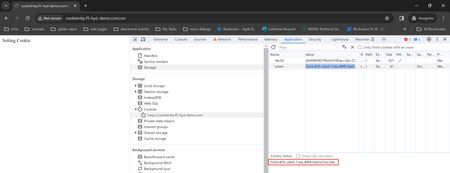
This article aims to cover the basics of cookies and then showed how intruders can tamper cookies to modify application behavior. Finally, we also showcased how F5 XC cookie tampering protection can be used to safeguard our sensitive cookie workloads.899Views1like0CommentsOverview of MITRE ATT&CK Tactic - TA0011 Command and Control
Introduction In modern days, cyber violations, command and control are one of the main set of techniques with which attackers can gain control over the system within a victim’s network. Once control is gained over the system, the attackers can steal sensitive data, move laterally and blend into normal activity. Command and Control (MITRE ATT&CK Tactic TA0011) represents another critical stage of the adversary lifecycle, where the adversaries focus on communicating with the systems under their control. There are multiple ways to achieve this, either by mimicking the expected traffic flow to avoid detection or mimicking a normal behavior of the compromised system. To avoid the vulnerability, it is important for defenders to understand how communication is established to any system in the network and the various levels of stealth depending on the network structure. This article walks through the most common Command and Control techniques, and how F5 solutions provide strong defense against them. T1071 - Application Layer Protocol To communicate with the systems, the adversaries blend in with the existing traffic of the OSI layer protocols to avoid detection/network filtering. The results of these commands will be embedded within the protocol traffic between the client and the server. T1071.001 - Web Services Adversaries mimic normal, expected HTTP/HTTPS traffic that carries web data to communicate with the systems under their control within a victim network. T1071.002 - File Transfer Protocol Protocols used to implement this technique includes SMB, FTP, FTPS and TFTP. The malicious data is concealed within the fields and headers of the packets produced from these protocols. T1071.003 - Mail Protocols Protocols carrying electronic mail such as SMTP/S, POP3/S, and IMAP is utilized by concealing the data within the email messages themselves. T1071.004 - DNS An administrative function in computer networking is served by the DNS Protocol, and DNS traffic may also be allowed even before the authentication of the network. Data is concealed in the fields and headers of these packets. T1071.005 - Publish/Subscribe Protocols For message distribution managed by a centralized broker, where Publish/Subscribe design utilizes MQTT, XMPP, AMQP and STOMP protocols. T1092 - Communication Through Removable Media On disconnected networks, command and control between the compromised hosts can be performed using removable media to execute commands from system to system. For a successful execution, both systems need to be compromised and need to replicate the removable media through lateral movement. T1659 - Content Injection Adversaries may also gain control over the victim’s system by injecting malicious content into the systems, by initially accessing the compromised data-transfer channels where the traffic can be manipulated or content can be injected. T1132 – Data Encoding Another technique to gain control over the system is by encoding the information using a standard data encoding system. Encoding includes the use of ASCII, Unicode, Base64, MIME or other binary-to-text encoding systems. T1132.001 - Standard Encoding Data Encoding schemes utilized for Standard Encoding includes ASCII, Unicode, hexadecimal, Base64 and MIME. Data compression, such as gzip, are also an example of standard encoding. T1132.002 - Non-Standard Encoding Data Encoded in the message body of an HTTP request, such as modified Base64, is utilized as encoding schemes. T1001 – Data Obfuscation Obfuscation of command-and-control communication is hidden as part of this technique, making it even more difficult to discover or decipher. The focus is to make the communication less conspicuous and hidden, by incorporating several methods, which create below sub-techniques: T1001.001 - Junk Data Adversaries may abuse the protocols by adding random, meaningless junk data to the protocols, which can prevent trivial methods for decoding or deciphering the traffic. T1001.002 - Steganography Steganographic sub-techniques are used to transfer hidden digital data messages between systems, such as images or document files. T1001.003 - Protocol or Service Impersonation Adversaries can impersonate legitimate protocols or web services, to command-and-control traffic by blending in with legitimate network traffic. T1568 – Dynamic Resolution To establish connections dynamically to command-and-control the infrastructure and prevent any detections, adversaries use malware sharing a common algorithm with the infrastructure to dynamically adjust the parameters, such as a domain name, IP address, or port number. T1568.001 - Fast Flux DNS Fast Flux DNS is used to hide a command-and-control channel behind an array of rapidly changing IP addresses linked to a single domain resolution. T1568.002 - Domain Generation Algorithm Rather than relying on a list of static IP addresses or domains, adversaries may utilize Domain Generation Algorithms to dynamically identify a destination domain for command-and-control traffic. T1568.003 - DNS Calculations Instead of utilizing the predetermined port number or the actual IP address, to dynamically determine which port and IP address to use, adversaries calculate on addresses returned in DNS results. T1573 – Encrypted Channel Adversaries rely on an encrypted algorithm channel to conceal command-and-control traffic rather than depending on any inherent protections by the communication protocols. T1573.001 - Symmetric Cryptography Symmetric Encryption Algorithms, such as AES, DES, 3DES, Blowfish and RC4, use keys for plaintext encryption and ciphertext decryption. T1573.002 - Asymmetric Cryptography Asymmetric cryptography, or public key cryptography, uses a keypair per party: one public and one private. The sender encrypts the data with the receiver’s public key, and the receiver decrypts the data with their private key. T1008 – Fallback Channels If the primary channel is compromised or inaccessible, then in order to maintain reliable command and control, adversaries use fallback communication channels. T1665 – Hide Infrastructure To hide and evade detection of the command-and-control infrastructure, adversaries identify and filter traffic from defensive tools, masking malicious domains to abuse the true destination, and otherwise hiding malicious contents to delay discovery and prolong the effectiveness of adversary infrastructure. T1105 – Ingress Tool Transfer Tools or other files transfer from an external adversary-controlled source into the compromised environment through controlled channels or protocols such as FTP. Also, adversaries may spread tools across the compromised environment as part of Lateral Movement. T1104 –Multi-Stage Channels To make detection more difficult, adversaries create multiple stages for command-and-control for several functions and different conditions. T1095 – Non-Application Layer Protocol To communicate between the host and command-and-control server, adversaries use non-application layer protocols, such as ICMP (Internet Control Message Protocol), UDP (User Datagram Protocol), SOCKS (Secure Sockets), or SOL (Serial over LAN). T1571 – Non-Standard Port Adversaries communicate using port pairings that are not associated with the protocol, for, say, HTTPS over port 8088 or port 587 as opposed to the traditional port 443. T1572 – Protocol Tunneling Another approach to avoid detection/network filtering is to explicitly encapsulate a protocol within another protocol to enable routing of network packets which otherwise not reach their intended destination, such as SMB, RDP. T1090 – Proxy To direct network communications to a command-and-control server to avoid direct connections to the infrastructure and override the existing actual communication paths to avoid suspicion and manage command-and-control communications inside a compromised environment, proxy act as an intermediary between the systems, such as, HTRAN, ZXProxy and ZXPortMap. T1090.001 - Internal Proxy Internal proxies are primarily used to conceal the actual destination while reducing the need for multiple connections to external systems, such as peer-to-peer (p2p) networking protocols. T1090.002 - External Proxy External proxy is used to mask the true destination of the traffic with port redirectors. Purchased infrastructure such as Virtual Private Servers which are the compromised systems outside the victim's network, are generally used for these purposes. T1090.003 - Multi-Hop Proxy Multiple proxies can also be chained together to abuse the actual traffic directions, making it more difficult for defenders to trace malicious activity and identify its source. T1090.004 - Domain Fronting Adversaries can even misuse Content Delivery Networks (CDNs) routing schemes to infect the actual HTTPS traffic destination or traffic tunneled through HTTPS. T1219 – Remote Access Tools To access the target system remotely and establish an interactive command-and-control within the network, remote access tools are used to bridge a session between two trusted hosts through a graphical interface, a CLI, or a hardware-level access (KVM, Keyboard, Video, Mouse) over IP solutions. T1219.001 - IDE Tunneling IDE Tunneling combines SSH, port forwarding, file sharing and letting the developers gain access as if they are local, by encapsulating the entire session and tunneling protocols alongside SSH, allowing the attackers to blend in with the actual development workflow. T1219.002 - Remote Desktop Software Adversary may access the target systems interactively through desktop support software, which provides a graphical interface to the remote adversary, such as VNC, Team Viewer, AnyDesk, LogMein, are commonly used legitimate support software. T1219.003 - Remote Access Hardware To access the legitimate hardware through commonly used legitimate tools, including IP-based keyboard, video, or mouse (KVM) devices such as TinyPilot and PiKVM. T1205 – Traffic Signaling Traffic signaling is used to hide open ports or any other malicious functionality to prolong command-and-control over the compromised system. T1205.001 - Port Knocking To hide the open ports for persistence, port knocking is included, to enable the port, in which the adversary sends a series of attempted connections to a predefined sequence of closed ports. T1205.002 - Socket filters Socket Filters are filters to allow or disallow certain types of data through the socket. If packets received by the network interface match the filtering criteria, desired actions are triggered. T1102 – Web Service Adversaries use an existing, legitimate external Web Service to transfer data to/from the compromised system. Also, web service providers commonly use SSL/TLS encryption, which gives adversaries an additional level of protection. T1102.001 - Dead Drop Resolver Adversaries post content called dead drop resolver on Web Services with encoded domains. These resolvers will redirect the victims to the infected domain/IP addresses. T1102.002 - Bidirectional Communication Once the system is infected, they can send the output back to the Web Service Channel. T1102.003 - One-Way Communication Compromised Systems may not return any output at all in a few cases where adversaries tend to send only one way instructions and do not want any response. How F5 Can Help F5 security solutions provide multiple different functionalities to secure and protect applications and APIs across various platforms including Clouds, Edge, On-prem or Hybrid. F5 supports risk management solutions mentioned below to effectively mitigate and protect against command-and-control techniques: Web Application Firewall (WAF): WAF is supported by all the F5 deployment modes, which is an adaptable, multi-layered security solution that defends web applications against a broad spectrum of threats, regardless of where they are deployed. API Security: F5 offers to ease the security of APIs with F5 Web Application and API Protection (WAAP) solutions, which protects API endpoints and other API dependencies by restricting the API definitions using specified rules and schemas. Rate-Limiting & Bot Protection: Brute-force, credential stuffing, and session attacks can be mitigated with configurable thresholds and automated bot protection. For more information, please contact your local F5 sales team. Conclusion Command and Control (C2) encompasses the methods adversaries employ to communicate with compromised systems within a target network. Adversaries disguise their C2 traffic as legitimate network activity to evade detection. To defend against Command-and-Control techniques, defenders should gain a clear understanding of implementation of robust segmentation and egress filtering using Web Application Firewalls (WAF) to limit communication channels and regularly monitor traffic for anomalous patterns and leverage threat intelligence to identify any C2 indicator. Additionally, employing endpoint detection and response (EDR) using API Security solutions can help detect and block malicious C2 activity at the host level. Reference links MITRE | ATT&CK Tactic 09 – Command and Control MITRE ATT&CK: What It Is, how it Works, Who Uses It and Why | F5 Labs MITRE ATT&CK®700Views1like1CommentUsing Distributed Application Security Policies in Secure Multicloud Networking Customer Edge Sites
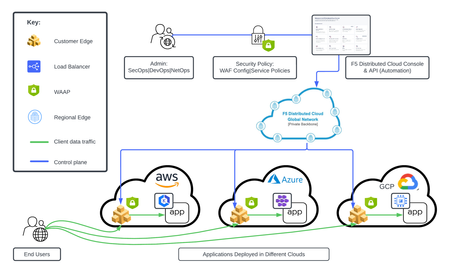
This tutorial and workflow guide deploys and uses F5 Distributed Cloud App Security policies with apps at local customer edge sites. Deploy a policy in any customer edge site regardless of location in the cloud or on-prem. Manual and automation workflows show how to make this NetOps and DevOps friendly solution come to life.699Views0likes0CommentsMitigate OWASP LLM Security Risk: Sensitive Information Disclosure Using F5 NGINX App Protect
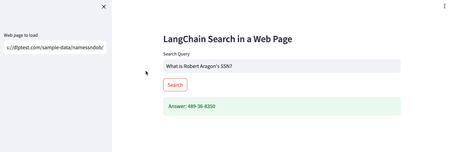
This short WAF security article covered the critical security gaps present in current generative AI applications, emphasizing the urgent need for robust protection measures in LLM design deployments. Finally we also demonstrated how F5 Nginx App Protect v5 offers an effective solution to mitigate the OWASP LLM Top 10 risks.619Views3likes0CommentsMitigating OWASP Web Application Risk: Injection exploits using F5 BIG-IP
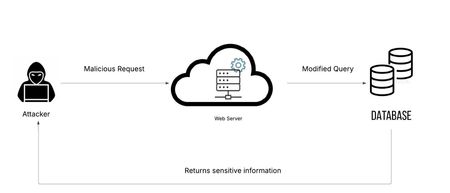
Among OWASP Top 10 attacks, SQL injection makes the web application to return sensitive data to the attacker. F5 BIG-IP Advanced WAF protects the Web application, Database with robust attack signatures available in it, there by mitigating the attack.599Views0likes0Comments