silva
72 TopicsOur Five Senses on Sensors
Aristotle (384 - 322 BC) is credited as the first person to classify our five sense organs: sight, smell, taste, touch, and hearing and Immanuel Kant, a famous philosopher from the 1700s said that our knowledge of the outside world depends on our modes of perception. Our highly developed organs of the eyes, ears, nose, tongue and the skin on your hand provide the sensing equipment necessary to send that information to the brain. In some cases, one of the sensors might not work properly in the case of the blind or deaf, yet the four other senses are heightened and exceed normal operation to make up for the missing information. Daniel Kish, for example, uses echolocation like a bat to see the imprint of the sound waves as they bounce back. Pretty cool, eh? Today, we're building gadgets that are used in conjunction with or completely taking over the the tasks of the eyes, ears, nose, tongue and hands. Things that were always part of our body are being replaced with micro-chipped things that act like, attach to - or better yet - integrate with our body. Sight: Of course there are security cameras to help us see our homes when we are away and most of us have heard of Google Glass but there are now eyeglasses being prototyped by BMW’s Mini division. They are combining the wearable with the connected car. These glasses communicate with the car via WiFi and offers a heads-up display like no other. While you can still see the real world, the glasses offer an overlay of speed, navigation, backup cameras and more. You can see just how close you are to the curb from the wheel's point of view. You can also look at a street sign and have it come to life with other overlays or additional info. While most of the data is just telemetry for now, engineers are looking to possibly incorporate driving features within the view. This is where IoT gets interesting - where one is used to compliment another. Also, Swiss engineers have developed a camera based on the human retina. Understanding the biology of the real thing, they've made a more efficient camera. Smell: Although there were attempts earlier, in the 1940-50's, Hans Laube created a system called Smell-O-Vision which would emit odors during the movie so the audience could smell what was happening in the movie. It was only used once. GE also developed a system in 1953 that they called Smell-O-Rama. Now you can get a smell app on your phone. ChatPerf is a thumb-drive-sized atomizer that plugs into your mobile device so it can be triggered to release specific odors on command. But those are scents out. Machines that can whiff stuff in have been around awhile. Think of your smoke, carbon-monoxide or radon detectors. Today we have wearable vapor sensors that can smell diabetes. Scientists have figured out how to use a sensor to identify the odor from melanoma to detect this form of skin cancer. Those human skin cells give off an odor that doctors can pick up with a sensor. And scientists in Israel who have already developed a nanotechnology breath analyzer for kidney failure are working on one that can distinguish between the breath of a lung cancer patient verses a healthy exhale. Crazy! Hearing: According to U.K. firm Wifore Consulting, Hearable technology alone will be a $5 billion market by 2018. Roughly the size of the entire wearable market today. Ears are able to capture things like oxygen levels, electrocardiograms, and body temperature. While sound drives the bulk of technology within this space, those ear buds could soon have technology that not only sends sounds but also captures some of your body information. And it is small enough and discrete to wear everywhere rather than carrying a mobile device. Initial uses trend with fitness. Ear buds that play music but also give you feedback on your workout. There are also smart earrings that monitor heart rate and activity. I've always said that there will come a time when we all have IPv6 chips in our ear and we'll just tug the lobe to answer a call. Carol Burnett would be proud. Touch: Want to give a robot the ability to feel? Done. Researchers have developed a flexible sensor able to detect temperature, pressure and humidity simultaneously and a big leap towards imitating the sensing features of the human skin. While still in the early stages, future sensors could be embedded into the "electronic skin" of prosthetics, allowing amputees sense environmental changes. Another is BioTac, a fingertip that can sense force, temperature, and vibration—in some cases better than a human finger. With laser 3D printing, some orthotics can be delivered in hours rather than months. Taste: Sweet, sour, salt and bitter used to be the domain of the tongue. Soon, electronic 'tongues' could be used to monitor the quality control of bottled water. Using chemical sensors, researchers in Texas have demonstrated that the electronic tongue can 'taste' different solutions. The sensors responded to different combinations of the four artificial taste elements with unique color combinations of red, green and blue. This enabled the device to analyze for several different chemical components simultaneously. I've written about smart chopsticks that can detect oils containing unsanitary levels of contamination, a fork that monitors how many bites you take and a smart cup that counts the amount and calories you drink. This is the Internet of Food. Wearables make technology personal and our five senses are what helps us navigate life, gives us perspective. Who would have thought that an individual's perspective would someday become embedded within coded software. ps Related: Wearables + Connected Cars = IoT Heaven Five ways retailers can start using IoT today Lesson: How Do Human Sensors Work? Hearables - the next big thing in wearable tech Human Touch: Sensor Lets Robots 'Feel' They've Got It Licked - Artificial Sensors Can Taste What's In A Complex Mixture Innovative Technology Powers the Wearables Movement My IoT Articles Technorati Tags: iot,wearables,senses,sensors,things,humans,hearables,sight,sound,smell,touch,taste,silva,f5 Connect with Peter: Connect with F5:1.8KViews0likes0CommentsThe Analog Generation
From Baby Boomers to Gen X, Y, & Z, there are certain characteristics that define, at least according to demographers and historians, each generation. Generation X, specifically, might also remember a Rush song called The Analog Kid. While not as frequently played as Tom Sawyer or Subdivisions, it has always been my favorite Rush song. Driving bass, awesome guitar solo, amazing imagery and Peart. I am that Generation. The Analog Generation. With all of our digital things getting connected, including things on and in our body, I started thinking that I'm part of the generation that transitioned from analog to digital. Not that analog or analog signals are disappearing anytime soon, but as a kid, there were way more analog things than digital, that's for sure. Audiophiles will also argue that analog recordings are better at capturing the true representation of sound due to it being continuous, rather than specific values to represent sound, as in the discrete digital. I wondered if I was the only one who figured this out - highly doubtful - so I searched. And actually, there are a few people who have made the connection. One who argues that today's kids, at least his kids, are very analog. They love playing outside, playing board games and other non-digital activities. He talks about the importance of parents giving their children attention in the real world. And the other one specifically talks about the analog things we remember as a kid - records, 8mm, rotary phones, black & white TV, VHS and others verses the CDs, DVDs, iPhones and HD TVs today's kids live with. Some feel that Rush's The Analog Kid is about a more innocent time with less technology in the world, longing for the simpler days. A cautionary tale. One person notes, 'Perhaps Peart's social comment with the two songs is how technology and science creates incredible wonders, but there's a cruel price to pay if there's no heart to guide it.' The other song he references is Digital Man, also on the Signals album. When I hear The Analog Kid it immediately takes me back to 1982 and whatever I was doing in high school. It is interesting that I took my first computer class in high school around that time...while still learning how to type...on a real typewriter. If you remember those, with the little IBM ball to change fonts, you're analog. The last lines of the song are: Too many hands on my time Too many feelings Too many things on my mind When I leave I don't know What I'm hoping to find When I leave I don't know What I'm leaving behind... We are certainly entering a new realm with IoT with a lot of hopes, dreams and ideas of things to come. And while they all might help us automatically adjust home temperatures, become a little healthier, auto drive our car, keep an eye on our home, and cook better dinners, we can't forget that humans are social creatures, not necessarily social media darlings, and our real family, friends and loves are what really matter. We're already forging a new frontier but we must tread carefully. ps Related The Analog Generation Analog vs. Digital Generations Is IoT Hype For Real? Internet of Things OWASP Top 10 The Top 10, Top 10 Predictions for 2015 OK 2015, Now What? The Digital Dress Code Welcome to the The Phygital World Technorati Tags: f5,analog,digital,rush,music,the analog kid,iot,things,sensors,humans,society,generations,silva Connect with Peter: Connect with F5:1.3KViews0likes0CommentsIs 2015 Half Empty or Half Full?
With 2015 crossing the half way point, let's take a look at some technology trends thus far. Breaches: Well, many databases are half empty due to the continued rash of intrusions while the crooks are half full with our personal information. Data breaches are on a record pace this year and according to the Identity Theft Resource Center (ITRC), there have been 400 data incidents as of June 30, 2015. One more than this time last year. And, 117,576,693 records had been compromised. ITRC also noted a 85% increase in the number of breaches within the banking sector. From health care to government agencies to hotel chains to universities and even Major League Baseball, breaches and attacks are now a daily occurrence. Cloud: Who would've thought back in 2008 that this cloud thing would now be half full? Over the last couple years, the 'cloud' has become a very viable option for organizations large and small. It is becoming the platform for IoT and many organizations such as Google and GE are now moving critical corporate applications to the cloud. While hybrid is the new normal remember, The Cloud is Still just a Datacenter Somewhere. DNS: While IPv4 addresses are now completely empty, DNS seems to be half to almost full in 2015. DNS continues to be a target for attackers along with being an enabler for IoT. It is so important that Cisco recently acquired OpenDNS to help fight IoT attacks and the courts got a guilty plea from an Estonian man who altered DNS settings on infected PCs with the DNSChanger malware. I think of DNS as a silent sufferer - you really don't care about it until it doesn't work. Start caring this year. Internet: Full but still growing. As noted above, IPv4 addresses are gone. Asia, Europe, Latin America and now North America have run out of IPv4 addresses and have exhausted their supplies. If you're wondering how to handle this glass, F5 has some awesome 4to6 and 6to4 solutions. IoT: Things, sensors and actuators are all the buzz and are certainly half full for 2015. At this time last year, IoT was at the top of the Gartner Hype Cycle and it has certainly not disappointed. Stories abound about Internet of Things Security Risks and Challenges, 10 of the biggest IoT data generators, the Top 10 Worst Wearable Tech Devices So Far, The (Far-Flung) Future Of Wearables, along with the ability to Smell Virtual Environments and if We Need Universal Robot Rights, Ethics And Legislation. RoboEthics, that is. Mobile: We are mobile, our devices are mobile and the applications we access are now probably mobile also. Mobility, in all it's connotations, is a huge concern for enterprises and it'll only get worse as we start wearing our connected clothing to the office. The Digital Dress Code has emerged. Mobile is certainly half full and there is no empting it now. Privacy: At this point with all the surveillance, data breaches, gadgets gathering our daily data and our constant need to tell the world what we're doing every second, this is probably bone dry. Pardon, half empty, sticking to the theme. That's what I got so far and I'm sure 2015's second half will bring more amazement, questions and wonders. We'll do our year in reviews and predictions for 2016 as we all lament, where did 2015 go? There is that old notion that if you see a glass half full, you're an optimist and if you see it half empty you are a pessimist. Actually, you need to understand what the glass itself was before the question. Was it empty and filled half way or was it full and poured out? There's you answer! ps Related: It's all contained within the blog. Technorati Tags: f5,breach,security,cloud,dns,iot,mobile,2015,silva,empty or full Connect with Peter: Connect with F5:1.2KViews0likes2CommentsInternet of Food
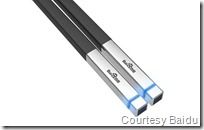
For those of you who like to post food pictures, this is something I can see being a benefit. Smart Chopsticks! Yup, you heard that right. Soon you'll be able to poke that dim sum and know if the food is tainted. Baidu, China's internet giant, unveiled them at their annual conference last week. While not ready for the mass market, Baidu says the chopsticks can detect oils containing unsanitary levels of contamination. They predict that you'll be able to detect the origin of oil and water and other foods...and whether they’ve spoiled and their nutritional content. You can hook them up to a smartphone to capture the content. They have a video which shows them dipping the chopsticks in olive oil and getting a 'good' reading and then doing the same with recycled oil and getting a 'bad' reading. As of today, the chopsticks only measure the freshness of cooking oil but future chopsticks also will be able to measure PH levels, temperature and calories. Of course I did a little digging to see what other utensil type things have gotten smarter. At CES 2013, Hapi Labs shared their Hapi Fork. A little bigger that your regular fork but after a charge, it'll monitor how many bites of food you take and at what rate. If you try to stuff your mouth with more than 1 bite every 10 seconds, the fork will vibrate to tell you to slow down. With USB, you can upload the data to track your eating or share with friends along with the plate in front of you. How about an instrument which tells you when you're about to bite the inside of your mouth? Then we got the Smart Cup, which counts the number of liquid calories you are two-fisting. Vessyl is a cup designed to automatically determine what’s been poured into it and track what you’re drinking in real-time. Whatever you pour into it, coffee, soda, juice, the sensors break it down to the molecular level to identify the beverage. It can even differentiate brands. Imagine the Pepsi Challenge in the one of these. It gives calorie count plus total grams of sugar, fat, protein, sodium and caffeine. You then connect to the app and it stores the drink along with making suggestions on healthier choices. Bad Bourbon...but so good. I know there are already smart refrigerators but I wonder what they'll be in the future. I was thinking about a fridge that had Rubik's cube type inside and based on whatever the sensors pick (smelly, past date, UPC, recall, whatever), those cubes move to the front so you can see what's about to spoil or needs to be eaten. How many times have you pulled a few things out and suddenly seen the science experiment covered in plastic wrap? This Internet of Things is branching in so many directions and it's interesting, at least to me, just how many items are starting to get sensors. The food supply has had it's share of recalls, contaminations, cover ups and other challenges and smart utensils really could be a life saver for some people, especially with food allergies. For me, it would be pretty cool to stick some food to find out if there is any lactose in it and then predict how soon I'll be bending over in stomach pain. That's smart. ps Related: 'Smart Chopsticks' Can Detect Bad Food Is Your Food Safe? New ‘Smart Chopsticks’ Can Tell Vessyl: A Smart Cup That Counts Liquid Calories CES 2013: Smart Utensils Remind You to Chew Your Food Is IoT Hype For Real? Internet of Things OWASP Top 10 Welcome to the The Phygital World Technorati Tags: iot,things,chopsticks,utensils,smart,sensors,nouns,silva,f5,food Connect with Peter: Connect with F5:999Views0likes1CommentIntelligent DNS Animated Whiteboard
DNS will become even more important as additional sensors, monitors, actuators and other 'things' connect to the internet. It helps those devices like refrigerators and automobiles get their updates and helps us people find those things in our digital world. Here is a short Whiteboard explaining how F5 can help solve DNS challenges. And check out our Intelligent DNS Scale Reference Architecture which delivers the peace of mind that comes with knowing that your web applications will respond to all DNS queries—keeping your content and applications available to your users wherever and whenever they want to access them. ps Related CloudExpo 2014: The DNS of Things GartnerDC 2013: Intelligent DNS Scale Reference Architecture The DNS of Things DNS Does the Job A Living Architecture Technorati Tags: dns,f5,iot,things,reference architecture,availability,silva Connect with Peter: Connect with F5:876Views0likes0CommentsInternet of Things OWASP Top 10
The Open Web Application Security Project (OWASP) is focused on improving the security of software. Their mission is to make software security visible, so that individuals and organizations worldwide can make informed decisions about true software security risks and their OWASP Top 10 provides a list of the 10 Most Critical Security Risks. For each risk it provides a description, example vulnerabilities, example attacks, guidance on how to avoid and references to OWASP and other related resources. Many of you are familiar with their Top 10 Most Critical Web Application Security Risks. They provide the list for awareness and guidance on some of the critical web applications security areas to address. It is a great list and many security vendors point to it to show the types of attacks that can be mitigated. Now the Internet of Things (IoT) has its own OWASP Top 10. If you've lived under a rock for the past year, IoT or as I like to call it, the Internet of Nouns, is this era where everyday objects - refrigerators, toasters, thermostats, cars, sensors, etc - are connected to the internet and can send and receive data. There have been tons of articles covering IoT over the last 6 months or so, including some of my own. The OWASP Internet of Things (IoT) Top 10 is a project designed to help vendors who are interested in making common appliances and gadgets network/Internet accessible. The project walks through the top ten security problems that are seen with IoT devices, and how to prevent them. The OWASP Internet of Things Top 10 - 2014 is as follows: 1 Insecure Web Interface 2 Insufficient Authentication/Authorization 3 Insecure Network Services 4 Lack of Transport Encryption 5 Privacy Concerns 6 Insecure Cloud Interface 7 Insecure Mobile Interface 8 Insufficient Security Configurability 9 Insecure Software/Firmware 10 Poor Physical Security You can click on each to get a detailed view on the threat agents, attack vectors, security weaknesses, along with the technical and business impacts. They also list any privacy concerns along with example attack scenarios. Good stuff! ps Related: The Icebox Cometh The Applications of Our Lives Standards for 'Things' Securing the Internet of Things: is the web already breaking up? 4 things that will happen in the Internet of Things space in 2014 Tech's brightest unconvinced by internet of things OWASP Internet of Things Top 10 Technorati Tags: iot,things,owasp,security,top10,privacy,silva,f5,nouns Connect with Peter: Connect with F5:765Views0likes0CommentsBIG-IP Edge Client v1.0.6 for iOS 7
With all your other iOS 7 updates (if you've made the plunge), if you are running the BIG-IP Edge Client on your iPhone, iPod or iPad, you may have gotten an AppStore alert for an update. If not, I just wanted to let you know that version 1.0.6 of the iOS Edge Client is available at the AppStore with iOS 7 support. Customers who use UDID in their access policies should have users update to this version. The BIG-IP Edge Client application from F5 Networks secures and accelerates mobile device access to enterprise networks and applications using SSL VPN and optimization technologies. Access is provided as part of an enterprise deployment of F5 BIG-IP Access Policy Manager, Edge Gateway, or FirePass SSL-VPN solutions. BIG-IP Edge Client for iOS Features: Provides accelerated mobile access when used with F5 BIG-IP Edge Gateway. Automatically roams between networks to stay connected on the go. Full Layer 3 network access to all your enterprise applications and files. ps Related: Manual: BIG-IP Edge Apps Client Compatibility Matrix BIG-IP Edge Client and BIG-IP Edge Portal for Apple iOS and Android software support policy Release Note: BIG-IP Edge Client for iOS 1.0.6 Advanced Edge Client Installation for Windows–The Mysteries of Windows Installer Revealed F5 BIG-IP Edge Client F5 BIG-IP Edge Portal F5 BIG-IP Edge Client for Android Technorati Tags: f5,big-ip,edge client,ssl-vpn,mobile,smartphone,ios7,apple,iphone,ipad,silva,remote access,security,secure access,apm Connect with Peter: Connect with F5:753Views0likes1CommentThe Icebox Cometh
Will the Internet of Things turn homes into a House of Cards? Our homes are being invaded...but not with critters that you'd call an exterminator for. Last summer I wrote Hackable Homes about the potential risks of smart homes, smart cars and vulnerabilities of just about any-'thing' connected to the internet. (I know, everyone loves a bragger) Many of the many 2014 predictions included the internet of things as a breakthrough technology? (trend?) for the coming year. Just a couple weeks ago, famed security expert Bruce Schneier wrote about how the IoT (yes, it already has it's own 3 letter acronym) is wildly insecure and often unpatchable in this Wired article. And Google just bought Nest Labs, a home automation company that builds sensor-driven, WiFi enabled thermostats and smoke detectors. So when will the first refrigerator botnet launch? It already has. Last week, Internet security firm Proofpoint said the bad guys have already hijacked up to 100,000 devices in the Internet of Things and used them to launch malware attacks. The first cyber attack using the Internet of Things, particularly home appliance botnets. This attack included everything from routers to smart televisions to at least one refrigerator. Yes, The Icebox! As criminals have now uncovered, the IoT might be a whole lot easier to infiltrate than typical PCs, laptops or tablets. During the attack, there were a series of malicious emails sent in 100,000 lots about 3 times a day from December 23 through January 6. they found that over 25% of the volume was sent by things that were not conventional laptops, desktops or mobile devices. Instead, the emails were sent by everyday consumer gadgets such as compromised home-networking routers, connected multi-media centers, televisions and that one refrigerator. These devices were openly available primarily due to the fact that they still had default passwords in place. If people don't update their home router passwords or even update the software, how are they going to do it for the 50+ (give or take) appliances they have in their home? Heck, some people have difficulty setting the auto-brew start time for the coffee pot, can you imagine the conversations in the future? 'What's the toaster's password? I need to change the bagel setting!' Or 'Oh no! Overnight a hacker replaced my fine Kona blend with some decaf tea!' Come on. Play along! I know you got one you just want to blurt out! I understand this is where our society/technology/lives are going and I really like the ability to see home security cameras over the internet but part of me feels, is it really necessary to have my fridge, toaster, blender and toilet connected to the internet? Maybe the fridge alerts you when something buried in back is molding. I partially get the thermostats and smart energy things but I can currently program my thermostat for temperature adjustments without an internet connection. I push a few buttons and done. Plus I don't have to worry about someone firing up my furnace in the middle of July. We have multiple locks on our doors, alarm systems for our dwellings, security cameras for our perimeter, dogs under the roof and weapons ready yet none of that will matter if the digital locks for our 'things' are made of dumpling dough. Speaking of dumplings, the smart-steamer just texted me with a link to see the live feed of the dim sum cooking - from inside the pot! My mind just texted my tummy to get ready. ps Related: Proofpoint Uncovers Internet of Things (IoT) Cyberattack The Internet of Things Is Wildly Insecure — And Often Unpatchable For The First Time, Hackers Have Used A Refrigerator To Attack Businesses The Internet Of Things Has Been Hacked, And It's Turning Nasty Smart refrigerators and TVs hacked to send out spam, according to a new report Here's What It Looks Like When A 'Smart Toilet' Gets Hacked Bricks (Thru the Window) and Mortar (Rounds) Technorati Tags: IoT,internet of things,botnet,malware,household,silva,attacks Connect with Peter: Connect with F5:736Views0likes3CommentsF5 Animated Whiteboards
F5 Animated Whiteboards offer a quick, visual story to some of today's technology challenges and how we can help solve those headaches. Our latest covers Next Generation IPS and how SSL encryption of applications is becoming the norm. SSL ensures the integrity and privacy of transactions, but poses a visibility problem for IPS systems. This lack of visibility means attackers can evade IPS by encrypting their transmissions within SSL. Learn how F5's intelligent ADC combined with next-generation IPS provides a solution that eliminates dangerous blind spots. ps Other F5 Animated Whiteboards F5 Enterprise Mobility Gateway Animated Whiteboard Intelligent DNS Animated Whiteboard F5 VoLTE Animated Whiteboard F5 Secure Web Gateway Whiteboard F5 DDoS Animated Whiteboard SSL Animated Whiteboard Application Availability Between Hybrid Data Centers Multi-Tenancy for the High Performance Services Fabric Animated Whiteboard Technorati Tags: f5,big-ip,security,whiteboard,video,synthesis,silva Connect with Peter: Connect with F5:721Views0likes0CommentsIs IoT Hype For Real?
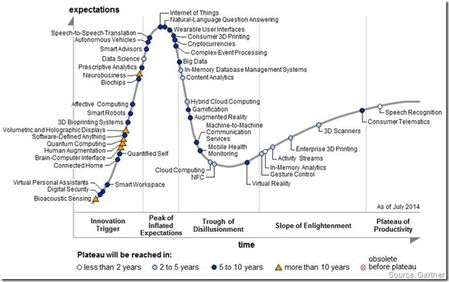
It is only fitting that the 20th anniversary of the Gartner Hype Cycle has the Internet of Things right at the top of the coaster. IoT is currently at the peak of Inflated Expectations. The Gartner Hype Cycle give organizations an assessment of the maturity, business benefit and future direction of more than 2,000 technologies. The theme for this year's Emerging Technologies Hype Cycle is Digital Business. As you can see, being at the top really means that there is a ton of media coverage about the technology, so much so that it starts to get a little silly. Everyone is talking about it, including this author. What you can also so is the downward trend to follow. This is the trough of disillusionment. Gamification, Mobile Health Monitoring and Big Data all fall into this area. It means that they already hit their big hype point but doesn't necessarily mean that it's over. The slope of enlightenment shows technologies that are finally mature enough to actually have reasonable expectations about. Each of the technologies also have a time line of when it'll mature. For IoT, it looks like 5 to 10 years. So while we're hearing all the noise about IoT now, society probably won't be fully immersed for another decade...even though we'll see gradual steps toward it over the next few years. Once all our people, places and things are connected, you can also get a sense of what else is coming in the Innovation Trigger area. Come the 2025 time frame, things like Smart Robots, Human Augmentation and a Brain Computer Interface could be the headlines of the day. Just imagine, instead of having to type this blog out on a keyboard, I could simply (and wirelessly) connect my brain chip to the computer and just think this. Hey, Stop reading my mind!! ps Related: Gartner's 2014 Hype Cycle for Emerging Technologies Maps the Journey to Digital Business Chart of the Week: The hype cycle of emerging technologies The Internet of Things and DNS F5 Predicts: Internet of Things Drives Demand for 'Social Intelligence' Internet of Things OWASP Top 10 The Icebox Cometh Technorati Tags: iot,things,sensors,nouns,gartner,hypecycle,media,silva,f5714Views0likes0Comments