f5 big-ip
8 Topics
Effective Traffic Management: Addressing ADC04's Insufficient Traffic Controls
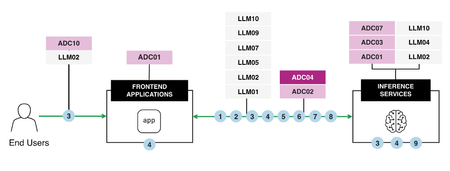
Applications today face unprecedented demand variability, requiring organizations to prioritize effective traffic management to ensure a seamless user experience. ADC04, one of the key challenges in application delivery per F5's "Application Delivery Top 10," highlights insufficient traffic controls. This issue plagues high-demand environments across industries such as e-commerce, healthcare, high-tech, automotive, insurance, and more, leading to performance bottlenecks, reduced availability, inefficiencies, and scalability challenges. Let's discuss the implications and solutions for this issue, with an added use case to demonstrate practical implementation. AI Reference Architecture The Challenge of Insufficient Traffic Controls Modern digital ecosystems experience fluctuating traffic volumes due to use cases like e-commerce promotions, flash sales, or API-driven workloads. For example, an e-commerce API could go from handling hundreds of requests per second (RPS) to thousands or more during promotional events. Without proper rate limiting, throttling, or caching mechanisms, public APIs become vulnerable to overburdened backend services, Distributed Denial of Service (DDoS) attacks, and inefficient scaling. Automated processes, such as analytics workloads, CI/CD deployments, and backups, exacerbate uneven workloads on backend systems. Furthermore, modern AI applications with data-intensive processing introduce yet another layer of complexity, requiring sophisticated traffic controls. The Consequences of Inefficient Traffic Controls Performance Issues Excessive traffic without sufficient controls leads to backend overload, degrading application response time. For example: User Frustration: Slow response times result in poor customer experiences, where 70% of shoppers abandon purchases due to delays. Critical Application Failures: In AI use cases, such as real-time conversational bots, processing delays impact outcomes and user trust. Reduced Availability API services lacking rate limiting and traffic throttling are especially prone to DDoS attacks or service outages. Additionally, backend systems may face resource starvation due to unoptimized caching mechanisms, reducing availability even during normal traffic conditions. Limited Scalability Applications unable to intelligently manage traffic flows struggle to handle unexpected traffic spikes. Inefficient caching and chaotic workload distribution limit the capacity to scale dynamically. Operational Inefficiencies The absence of automated traffic controls forces manual monitoring and intervention during traffic surges. High operational overhead and inefficient resource usage affect cost-effective management of infrastructure. Use Case example: Implementing Traffic Controls for an E-Commerce Public API The diagram below illustrates a practical implementation of traffic controls using advanced Application Delivery Controller (ADC) features (e.g., BIG-IP Local Traffic Manager) for an e-commerce public API. While tailored for e-commerce, these are equally applicable to other industries, such as finance, insurance, high-tech, and automotive. Key Features for Effective Traffic Management: Global Rate Limiting: Enforces a cap on total requests per second (RPS) to avoid backend overload. Per-API Key Throttling: Limits RPS at an API key level (e.g., 100 RPS per user), ensuring fair usage. CAPTCHA Trigger: Introduces CAPTCHA challenges for clients exceeding predefined limits to mitigate abuse. Circuit Breaker Logic: Detects faults in backend API servers and reroutes traffic to stable instances where possible. Traffic Forwarding or Rejection: Directs healthy requests to backend API servers and rejects problematic traffic. Comprehensive Logging and Metrics: Logs control events, such as rate-limit breaches or circuit-break activations, and streams them into observability platforms like ELK, Prometheus, or Datadog for dashboards and automated alerts. Functionality Overview Clients Send API Requests: Public API clients interact with the ADC (BIG-IP LTM), where all incoming requests are initially processed. Rate Limiting and Key Enforcement: The ADC enforces global rate limits and per-client throttling policies to avoid overloading backend servers. Action on Violations: Requests breaching limits trigger appropriate actions—delays, CAPTCHAs, or outright rejection. Health-Check Monitoring: The ADC regularly monitors backend API servers for faults and dynamically reroutes traffic to healthy nodes using circuit-breaker policies. Logs and Metrics Streaming: All traffic patterns, rule activations, and violations are logged and streamed to observability platforms for operational transparency. Best Practice Recommendations for Traffic Controls Rate Limiting and Throttling Global and per client rate limits are critical for protecting backend services during demand surges. For example: Put a 100 RPS cap per API key. Differentiate limits for premium services or geographies where critical workloads demand higher quality of service. Intelligent Caching Caching reduces backend load by offloading repetitive requests: Use semantic and edge caching for dynamic workloads like AI APIs. Adopt adaptive caching mechanisms to handle variable traffic patterns and reduce latency. Circuit Breaker Logic Circuit breakers prevent cascading failures in the API ecosystem by rerouting traffic to healthy systems: Monitor backend server health dynamically. Use adaptive retry mechanisms to minimize disruptions. Observability and Logging Real-time logging and monitoring tools like ELK or Prometheus provide insights into API performance: Set up custom dashboards to monitor API health, rate-limit violations, and traffic loads. Automate alerts for anomalies (e.g., high latency or recurring limit breaches). Conclusion As demonstrated by the use case, robust traffic controls are essential for managing fluctuating workloads, ensuring availability, and optimizing operational efficiency. Layered controls such as rate limiting, advanced caching, and circuit breaker mechanisms enforce resilience and scalability. Integrating observability tools ensures transparency and rapid issue resolution in real time. With insufficient traffic controls identified as a major challenge, adopting these strategies is crucial for long-term API operational success, particularly for high-traffic environments across industries such as e-commerce, finance, insurance, high-tech, and automotive. Reference Article Managing Traffic with Bandwidth Controllers Intelligent Traffic Management with the F5 BIGIP Platform Mitigating OWASP API Security Risks: Unrestricted Resource Consumption using BIG-IP iRule::ology - Table Based Rate Limiting AI reference architecture ADSP Platform overview The Application Delivery Top 1049Views1like0CommentsADC02 – Lack of Fault Tolerance & Resilience in Enterprise Applications Using A2A Protocol
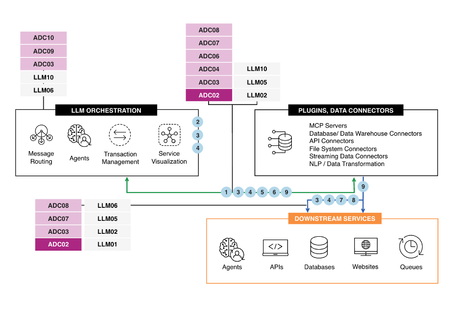
Introduction In the world of enterprise applications, fault tolerance and resilience play a central role in ensuring uninterrupted service delivery. However, the absence of these critical components can lead to degraded performance, downtime, costly inefficiencies, and dissatisfied users. This article explores fault tolerance challenges using the A2A protocol in enterprise applications, leveraging F5 BIG-IP to resolve primary data center failures, as illustrated in the attached diagram. AI Reference Architecture The Use Case at a glance The architecture for this scenario involves: AI Clients initiating A2A traffic routed via a Primary BIG-IP LTM. The Primary BIG-IP LTM processes the requests and routes intelligently based on A2A protocol inspection. In the event of a Primary BIG-IP failure, a Standby BIG-IP LTM in a high availability (HA) configuration takes over seamlessly. AI Agents (hosted across multiple instances) process user traffic through the Active BIG-IP, ensuring continuous service availability. This structure ensures resilience while avoiding performance bottlenecks caused by load imbalances or failures. Consequences of a Lack of Fault Tolerance and Resilience Impact on Performance Without adequate fault tolerance mechanisms: Failures in a primary system increase the load on remaining servers, causing degraded response times. Systems experience 35% more downtime during high-load scenarios, as indicated by LoadView’s 2024 network performance report. Impact on Availability A lack of redundancy or failover capabilities results in prolonged downtime when a failure occurs, tarnishing organizational reputation and eroding user trust. In complex environments, cascading failures can be triggered, amplifying the chaos. Impact on Scalability Systems lacking fault tolerance cannot scale dynamically to meet changing traffic demands. Rapid traffic surges overwhelm resources, causing bottlenecks. Overprovisioning as a stopgap becomes costly and inefficient. Impact on Operational Efficiency When failures occur, manual interventions become necessary, which increase operational overhead, downtime, and costs. Automated mechanisms for failover and load balancing are critical in reducing reliance on human intervention and ensuring operational efficiency. Solutions to Enable Fault Tolerance and Resilience Using F5 BIG-IP Load Balancing with BIG-IP F5 BIG-IP's iRules dynamically route A2A traffic, ensuring intelligent management even in volatile conditions. A load balancing configuration includes: Active-Standby Configuration: Load balancing redirects traffic to the standby BIG-IP in case of failure. Active-Active Configuration (Optional): For consistently high traffic volumes, active-active HA ensures even traffic distribution, improving both availability and scalability. High Availability (HA) Setup BIG-IP’s HA architecture supports synchronized active and standby systems: Failover Objects and Floating IPs allow seamless rollover during primary system failures. Redundant servers prevent single points of failure, ensuring uninterrupted operations. Comprehensive Health Monitoring Advanced health checks go beyond simple pings to assess the full responsiveness and integrity of applications and supporting infrastructure: Use distributed health checks from geographically disparate locations to simulate actual user experiences. Create application-specific health checks to test backend systems fully. Programmable Infrastructure Programmable infrastructure with F5 BIG-IP allows organizations to: Customize fault-tolerance strategies tailored for specific applications. Adjust traffic dynamically in real-time using programmable application delivery controllers (ADCs). Automation for Instant Response By integrating failover automation, organizations can: Detect and mitigate failures faster, reducing downtime. Lower operational overhead by minimizing manual interventions. Best Practices for Fault Tolerance Optimization Readiness Planning Use resources like "BIG-IP HA - Do it the Proper Way" to correctly implement HA configurations. Synchronize configurations and session data between BIG-IP devices. Tailored Load Balancer Configurations Optimize load balancing policies for real-world traffic patterns. Implement automated traffic redirection during outages. Proactive Monitorin Constantly monitor application performance via distributed health checks described in the "F5 Academy - BIG-IP HA - Do it the Proper Way". Resilience Testing Periodically test failover functionality to ensure system readiness to handle failures under real-world conditions. Resource Scalabilit Leverage the F5 Active-Active HA Configuration for highly scalable environments. Why Fault Tolerance Matters Fault tolerance isn’t just a technical concept; it directly dictates application availability, performance, and scalability. Proactive strategies like HA, programmable infrastructure, and automation enable organizations to build resilient systems capable of handling any disruptions. Conclusion In the ever-evolving digital landscape, resilience and fault tolerance are no longer optional—they are imperative. Leveraging F5 BIG-IP solutions for HA, intelligent load balancing, and failover mechanisms ensures applications remain available, scalable, and efficient, even during disruptions. By building fault-tolerant systems, enterprises not only meet today’s challenges but also position themselves for future growth and stability. Learn More Explore these resources to dive deeper into enabling fault tolerance and resilience: Intro to: BIG-IP HA - Do it the Proper Way High availability on F5 BIG-IP load balancers F5 BIG-IP HA Active Standby Configuration F5 Active-Active HA Configuration F5 Academy - BIG-IP HA - Do it the Proper Way ADSP Platform overview AI reference architecture The Application Delivery Top 1047Views1like0Comments