public sector
3 TopicsImplementing F5 NGINX STIGs: A Practical Guide to DoD Security Compliance
Introduction In today’s security-conscious environment, particularly within federal and DoD contexts, Security Technical Implementation Guides (STIGs) have become the gold standard for hardening systems and applications. For organizations deploying NGINX—whether as a web server, reverse proxy, or load balancer—understanding and implementing NGINX STIGs is critical for maintaining compliance and securing your infrastructure. This guide walks through the essential aspects of NGINX STIG implementation, providing practical insights for security engineers and system administrators tasked with meeting these stringent requirements. Understanding STIGs and Their Importance STIGs are configuration standards created by the Defense Information Systems Agency (DISA) to enhance the security posture of DoD information systems. These guides provide detailed technical requirements for securing software, hardware, and networks against known vulnerabilities and attack vectors. For NGINX deployments, STIG compliance ensures: Protection against common web server vulnerabilities Proper access controls and authentication mechanisms Secure configuration of cryptographic protocols Comprehensive logging and auditing capabilities Defense-in-depth security posture Key NGINX STIG Categories Access Control and Authentication Critical Controls: The STIG mandates strict access controls for NGINX configuration files and directories. All NGINX configuration files should be owned by root (or the designated administrative user) with permissions set to 600 or more restrictive. # Verify permissions sudo chmod 600 /etc/nginx/nginx.conf Client Certificate Authentication: For environments requiring mutual TLS authentication, NGINX must be configured to validate client certificates: # Include the following lines in the server {} block of nginx.conf: ssl_certificate /etc/nginx/ssl/server_cert.pem; ssl_certificate_key /etc/nginx/ssl/server_key.pem; # Enable client certificate verification ssl_client_certificate /etc/nginx/ca_cert.pem; ssl_verify_client on; # Optional: Set verification depth for client certificates ssl_verify_depth 2; location / { proxy_pass http://backend_service; # Restrict access to valid PIV credentials if ($ssl_client_verify != SUCCESS) { return 403; } } Certificate Management: All certificates must be signed by a DoD-approved Certificate Authority Private keys must be protected with appropriate file permissions (400) Certificate expiration dates must be monitored and renewed before expiry Cryptographic Protocols and Ciphers One of the most critical STIG requirements involves configuring approved cryptographic protocols and cipher suites. Approved TLS Versions: STIGs typically require TLS 1.2 as a minimum, with TLS 1.3 preferred: ssl_protocols TLSv1.2 TLSv1.3; FIPS-Compliant Cipher Suites: When operating in FIPS mode, NGINX must use only FIPS 140-2 validated cipher suites: ssl_ciphers 'TLS_AES_256_GCM_SHA384:TLS_AES_128_GCM_SHA256:ECDHE-ECDSA-AES256-GCM-SHA384:ECDHE-RSA-AES256-GCM-SHA384:ECDHE-ECDSA-AES128-GCM-SHA256:ECDHE-RSA-AES128-GCM-SHA256'; ssl_prefer_server_ciphers on; Logging and Auditing Comprehensive logging is mandatory for STIG compliance, enabling security monitoring and incident response. Required Log Formats: log_format security_log '$remote_addr - $remote_user [$time_local] ' '"$request" $status $body_bytes_sent ' '"$http_referer" "$http_user_agent" ' '$request_time $upstream_response_time ' '$ssl_protocol/$ssl_cipher'; access_log /var/log/nginx/access.log security_log; error_log /var/log/nginx/error.log info; Key Logging Requirements: Log all access attempts (successful and failed) Capture client IP addresses and authentication details Record timestamps in UTC or local time consistently Ensure logs are protected from unauthorized modification (600 permissions) Implement log rotation and retention policies Pass Security Attributes via a Proxy STIGs require implementation of security attributes to implement security policy for access control and flow control for users, data, and traffic: # Include the "proxy_pass" service as well as the "proxy_set_header" values as required: proxy_pass http://backend_service; proxy_set_header X-Security-Classification "Confidential"; proxy_set_header X-Data-Origin "Internal-System"; proxy_set_header X-Access-Permissions "Read,Write"; Request Filtering and Validation Protecting against malicious requests is a core STIG requirement: # Limit request methods if ($request_method !~ ^(GET|POST|PUT|DELETE|HEAD)$) { return 405; } # Request size limits client_max_body_size 10m; client_body_buffer_size 128k; # Timeouts to prevent slowloris attacks client_body_timeout 10s; client_header_timeout 10s; keepalive_timeout 5s 5s; send_timeout 10s; # Rate limiting limit_req_zone $binary_remote_addr zone=req_limit:10m rate=10r/s; limit_req zone=req_limit burst=20 nodelay; SIEM Integration Forward NGINX logs to SIEM platforms for centralized monitoring: # Syslog integration error_log syslog:server=siem.example.com:514,facility=local7,tag=nginx,severity=info; access_log syslog:server=siem.example.com:514,facility=local7,tag=nginx NGINX Plus Specific STIG Considerations Organizations using NGINX Plus have additional capabilities to meet STIG requirements: Active Health Checks upstream backend { zone backend 64k; server backend1.example.com; server backend2.example.com; } match server_ok { status 200-399; header Content-Type ~ "text/html"; body ~ "Expected Content"; } server { location / { proxy_pass http://backend; health_check match=server_ok; } } JWT Authentication For API security, NGINX Plus can validate JSON Web Tokens: location /api { auth_jwt "API Authentication"; auth_jwt_key_file /etc/nginx/keys/jwt_public_key.pem; auth_jwt_require exp iat; } Dynamic Configuration API The NGINX Plus API must be secured and access-controlled: location /api { api write=on; allow 10.0.0.0/8; # Management network only deny all; # Require client certificate ssl_verify_client on; } Best Practices for STIG Implementation Start with Baseline Configuration: Use DISA's STIG checklist as your starting point and customize for your environment. Implement Defense in Depth: STIGs are minimum requirements; layer additional security controls where appropriate. Automate Validation: Use configuration management and automated scanning to maintain continuous compliance. Document Deviations: When technical controls aren't feasible, document risk acceptances and compensating controls. Regular Updates: STIGs are updated periodically; establish a process to review and implement new requirements. Testing Before Production: Validate STIG configurations in development/staging before deploying to production. Monitor and Audit: Implement continuous monitoring to detect configuration drift and security events. Conclusion Achieving and maintaining NGINX STIG compliance requires a comprehensive approach combining technical controls, process discipline, and ongoing vigilance. While the requirements can seem daunting initially, properly implemented STIGs significantly enhance your security posture and reduce risk exposure. By treating STIG compliance as an opportunity to improve security rather than merely a checkbox exercise, organizations can build robust, defensible NGINX deployments that meet the most stringent security requirements while maintaining operational efficiency. Remember: security is not a destination but a journey. Regular reviews, updates, and continuous improvement are essential to maintaining compliance and protecting your infrastructure in an ever-evolving threat landscape. Additional Resources DISA STIG Library: https://public.cyber.mil/stigs/ NGINX Security Controls: https://docs.nginx.com/nginx/admin-guide/security-controls/ NIST Cybersecurity Framework: https://www.nist.gov/cyberframework Have questions about implementing NGINX STIGs in your environment? Share your challenges and experiences in the comments below.261Views1like0Comments
F5預測:生活、自由與寬頻權
Please find the English language post from which this was adapted here. 印度總理莫迪(Narendra Modi)上任時,政府即訂下明確的優先目標,其通訊部長表示:「如果瓦巴依(Atal Bihari Vajpayee)政府以興建全國高速公路著稱,那麼莫迪政府將以構築寬頻高速公路留名。」我們或許會驚訝印度將網際網路連接性看成比其他許多重要的國家建設還要優先,但是未來一年類似這樣的宣佈將變得越來越平常,因為我們已開始達成廣大的共識,認為開放且經濟的寬頻網際網路存取並非特權而是一種基本權利。最近一項以24國網際網路使用者為對象的調查顯示,83%受訪者相信經濟的網際網路存取應該成為一項基本人權。 事實上,聯合國已在一份報告中指出「有鑑於網際網路已成為實現廣泛人權、對抗不平等、以及加速發展和促進人類進步的一項不可或缺的工具,因此普及化網際網路存取能力的確保應成為所有國家的優先目標。」 最近,美國政府在一項肯定網際網路對日常生活之重要性的行動中,已正式將其歸類為一種基本的公共事業,希望它維持開放給大眾和企業存取而不會遭到自私的利用。從這個意涵來看,網際網路已開始被視為類似其他公共事業,例如電力、水和電話連接性。 促成這項觀念的改變,是因為人們與世界的互動方式產生了巨大的變化。技術與網際網路介入人們日常活動的層面越來越廣,從簡單的查詢巴士時刻表到更重要的社會義務,例如投票註冊等。而隨著公共服務的數位交付在2015到達一個臨界點,站在數位落差劣勢端的後果從未如此明顯 當然,欠缺網際網路存取的結果並非只是造成個人自由與意見遭到抑制。由網際網路提供的連接性與工具幫助人們建立社群、促進經濟發展、提供關鍵服務以及從其他許多廣泛的方面加速社會進步。網際網路現在已成為主要的促成機制,包括公民的群集、意見的散播、以及經濟機會的開拓。少了它,那些受抑制的人們將維持被支配的命運,而經濟弱勢者的向上動能將減至最低。 前國際電信聯盟(International Telecommunication Union)秘書長Hamadoun Touré曾指出:「如果在醫療方面欠缺電子化醫療,在教育方面欠缺電子化教育,將無法達到千禧年目標(Millennium Development goals),而若果沒有電子化政府服務也將無法提供政府服務。」 在瑞士,領先的電信服務供應商Swisscom在一項公私合夥關係下,為瑞士所有學校提供免費的網際網路存取,滿足電子化教育需求。為了連接超過6,800所中小學的100多萬學生與教師使用群,Swisscom需要一個穩定、高效能且可靠的方案以支援負載平衡、URL過濾、代理管理與安全等需求。為此,F5夥伴eXecure為其提供F5流量管理與安全方案。 芬蘭是全球第一個將寬頻訂為所有公民權利的國家,於2010年建立了速度標竿。其他國家,從愛沙尼亞到西班牙乃至於哥斯達黎加等相繼跟進,將網際網路存取定義為一項權利或普遍服務(universal services)的一部分。未來一年,我預期越來越多亞洲國家也將採納這個觀點,尤其著重於行動寬頻。我們在這個地區已有許多領導先驅,例如新加坡的Next Gen NBN已將高速寬頻普及到超過95%國土,而南韓、香港與日本則是全球平均連線速度最高的三個國家地區。 這個趨勢也意謂著在不久的未來將增加數百萬或甚至數十億上線人口。企業與政府將有極大的新機會可以運用此一趨勢。然而,他們將需要做好準備以便快速延展並順應一個新的全數位世界,同時維持嚴密的安全與隱私保護。 例如,比利時政府在決定透過網際網路將年金資料開放給該國所有受雇者與支領年金者存取時,面對一些重大的課題,包括必須確保這些高度個人化且敏感的資料不會遭受非法存取,而且也必須確保數百萬潛在使用者的高效能服務存取和可用性。一家F5夥伴公司與相關當局合作,部署一套F5應用交付方案以確保效能和可用性,包括於發生錯誤時的立即接管(failover),並且搭配一個強韌的應用安全模組,支援建立客製化登入程序、在Web伺服器之間路由流量、以及藉由F5 iRules腳本程式強化應用層安全性。 寬頻已成為一項普世權利,它開啟了一個充滿重大機會以及特定風險的全新世界 - 我已迫不及待。282Views0likes0CommentsF5 Predicts: A right to life, liberty and… broadband
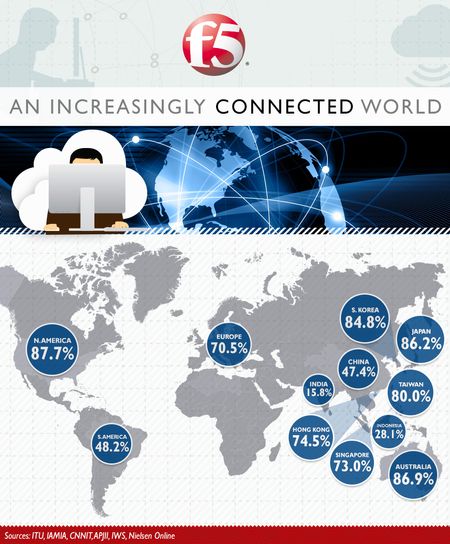
When Indian Prime Minister Narendra Modi took office, his government made its priorities clear: ““If Atal Bihari Vajpayee government was known for national highways, Narendra Modi government will be known for broadband highway,” his Communications Minister said. It might seem surprising that internet connectivity would take top priority among many other issues of national importance, but in the coming year statements like these will become more and more commonplace as we start to reach broad consensus that open and affordable broadband internet access is more a right than a privilege. One recent poll of internet users in 24 countries found that 83% of them believe that affordable access to the internet should be a basic human right. Already, the United Nations has stated in a report that "Given that the Internet has become an indispensable tool for realizing a range of human rights, combating inequality, and accelerating development and human progress, ensuring universal access to the Internet should be a priority for all states." Just today, in a move that recognizes the importance of the Internet in everyday life, the US government has officially classified it as a basic utility, in the hope that it remains accessible to the public and enterprises without exploitation. In this sense, Internet is beginning to be viewed as akin to essential public utilities like electricity, water, and telephone connectivity. This change in opinion is driven by the tectonic shift in the way that people interact with the world. Everyday activities are increasingly mediated by technology and the internet – from something as simple as checking a bus timetable to more important social duties, like registering to vote. And with digital delivery of public services reaching a tipping point in 2015, the consequences of being on the wrong side of the digital divide have never been more apparent. Of course, it’s not just individual liberties and options that are curtailed by the lack of internet access. The connectivity and tools offered by the internet builds communities, fuels economies, provides critical services and accelerates societal progress in many other broad ways. The Internet is now the principal enabling mechanism by which citizens assemble, ideas spread and economic opportunities are sowed. Without it, the oppressed are more likely to remain subjugated and the economic underclass to have minimal access to upward mobility. As former International Telecommunication Union Secretary General Hamadoun Touré has said, “You will not be able to meet the Millennium Development goals in health without e-health, in education without e-education and government services will not be able to be provided without e-government services.” In Switzerland, leading telecommunications provider Swisscom has already met the need for e-education by rolling out free Internet access for all Swiss schools as part of a public-private partnership. To connect the more than 6,800 primary and secondary schools, with a potential user base of over one million pupils and teachers, Swisscom needed a stable, high- performance, and reliable solution for load balancing, URL filtering, proxy management, and security, which F5 partner eXecure was able to provide with the F5 Traffic Management and Security solutions. . Finland was the first country in the world to make broadband a legal right for all its citizens, with speed benchmarks put in place in 2010. Other nations from Estonia to Spain to Costa Rica have followed suit, defining internet access as a right or part of universal services. In the coming year, I expect countries in Asia to increasingly adopt this perspective as well, with a particular focus on mobile broadband being a key piece of the puzzle. Already we have many leaders in the region: Singapore’s Next Gen NBN, for example, has already brought high speed broadband to over 95% of the nation; South Korea, Hong Kong, and Japan boast the three highest average connection speeds in the world. This trend also means millions, or even billions, more people online in the near future. Enterprises and governments will have a tremendous wealth of new opportunities to tap into. However, they will need to be prepared to rapidly scale and adapt to a new all-digital world, all while keeping a close eye on security and privacy issues. The Belgian government, for example, faced some significant concerns when it decided to make pension data accessible over the Internet to all employed people and pensioners in the country – it had to secure this highly personal and sensitive data from unauthorized access, and it had to ensure high performance and availability for a potential user base of many millions of people. An F5 partner worked with the agency involved to deploy a F5 application delivery solution to ensure performance and availability, including instant failover in the event of a fault, along with a robust application security module with customized processes for logging in, routing traffic between web servers, and strengthening application layer security scripted with F5 iRules. Broadband becoming a universal right heralds a brave new world filled with big opportunities as well as certain risks – and I can’t wait.420Views0likes1Comment